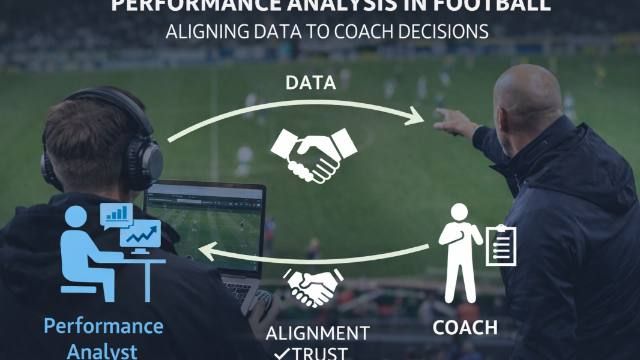
Performance Analysis (PA) has become a fundamental component of modern football, widely recognized as a tool for enhancing decision-making and improving team and player performance. However, while traditional models often present PA as a structured and linear process, applied practice reveals a far more complex and dynamic reality.
The study “I code as much as I can because you never know what they might ask for’. The role of the coach in Performance Analysis: The view of the analyst” by Mulvenna, C., Bloyce, D., Twist, C. and Thomson, E., (2024) challenges these simplified perspectives by exploring how performance analysts working in professional football perceive the role of the coach within the analysis process. Based on qualitative interviews with full-time analysts in the English Football League and National League, the research provides valuable insights into the operational realities of PA.
Performance Analysis: Beyond Linear Models
At its core, PA is designed to provide an objective record of performance through systematic observation, combining video and statistical data to support coaching decisions. However, the study highlights a critical gap between theory and practice.
Rather than following a fixed framework, PA is revealed as a fluid, context-driven process, influenced by multiple factors, including:
- The coach’s philosophy
- The analyst’s expertise
- The club environment
- Time constraints and match context
This challenges the assumption that PA operates as a standardized system and instead positions it as a highly adaptive practice embedded within the coaching process.
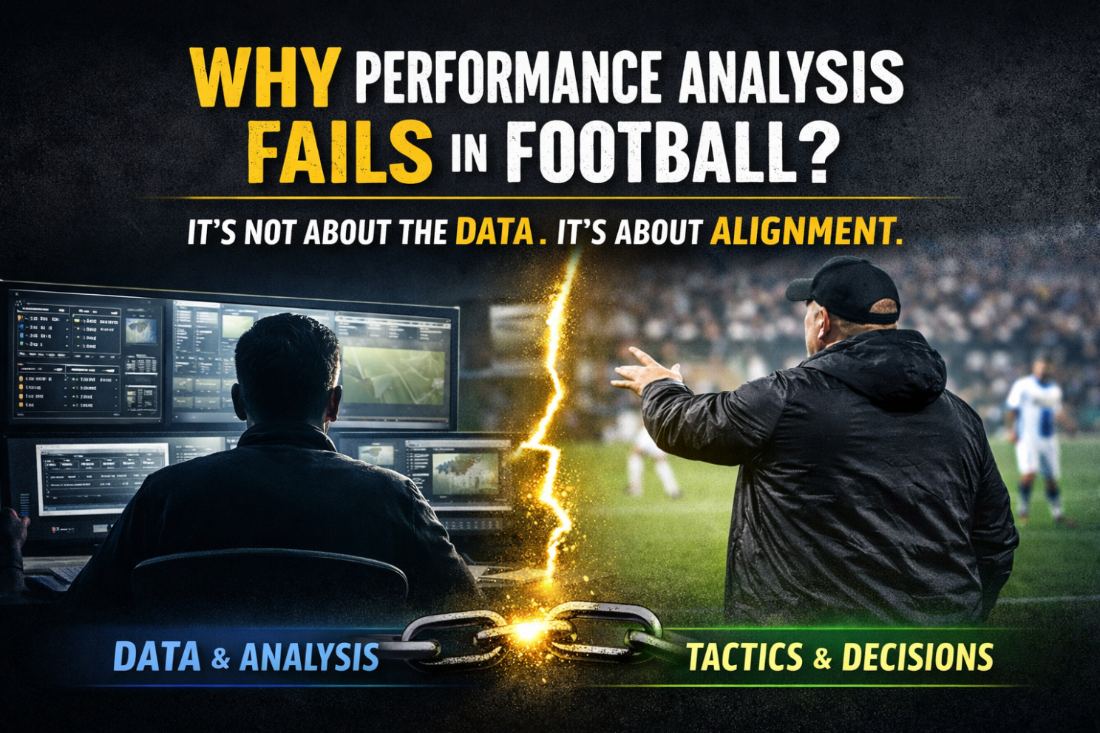
The Coach–Analyst Relationship: The Decisive Factor
One of the most significant findings of the study is that the effectiveness of PA is not determined solely by the quality of data, but by the strength of the relationship between the coach and the analyst.
The research identifies a continuum between two operational models:
- Analyst-led (“Flying Solo”) – where analysts take initiative with limited coach input
- Coach-controlled – where the coach dictates the direction and application of analysis
In reality, most environments operate somewhere between these two extremes, with responsibilities shifting depending on the phase of the match and the nature of the task. Therefore, PA only becomes impactful when it is understood, trusted, and effectively used by the coach.
Trial-and-Error: A Hidden Reality of Applied Practice
A notable insight from the study is that analysts often rely on a trial-and-error approach when working with coaches. In many cases:
- Analysts initially provide a wide range of outputs
- Coaches selectively engage with certain types of information
- Analysts then refine their work based on what is actually used
While this process can eventually lead to alignment between the analyst and the coach, it often reflects a lack of structured collaboration, limited clarity in initial expectations, and potential inefficiencies in both time and workflow. This highlights the importance of establishing clear communication and defined roles from the outset, ensuring that both parties are aligned early in the process to maximize the effectiveness and impact of performance analysis.
Who Defines Performance? The Role of Indicators
A critical issue highlighted in the study is the lack of collaboration between coaches and analysts in defining performance indicators (PIs). In many cases, analysts independently decide which metrics to track, while coaches have minimal input in shaping these indicators. This creates a clear disconnect between what is measured and what the coach actually values within the tactical context. From a performance perspective, this misalignment presents a significant risk, as it can lead to misinterpretation of data, generation of irrelevant insights, and ultimately a reduced impact on decision-making. Therefore, for Performance Analysis to be truly effective, it must involve shared ownership of performance metrics, ensuring that analytical outputs are fully aligned with the coach’s tactical objectives and practical needs.
Coach Control in Player-Facing Analysis
While performance analysts often operate independently in areas such as data collection and coding, the study highlights that coaches typically retain control over the player-facing aspects of analysis, particularly in pre-match opposition presentations, post-match reviews, and half-time feedback. In these situations, the analyst’s role is largely centered on compiling video clips, preparing presentations, and delivering content based on the coach’s specific instructions. This dynamic can significantly limit the analyst’s influence within the decision-making process, positioning them more as a technical executor rather than a strategic contributor, and potentially underutilizing their full analytical expertise.
Performance Analysis as a Contextual Process
Ultimately, the study concludes that Performance Analysis (PA) cannot be understood as a universal model. Instead, it should be viewed as a context-specific process, shaped by:
- The coach’s engagement level
- Organisational culture
- Available resources
- Interpersonal dynamics within the staff
This explains why the same analytical approach may succeed in one environment but fail in another.
Conclusion: From Data to Impact
The findings of this study reinforce a fundamental principle in modern football: the true value of performance analysis does not lie in the data itself, but in how effectively it is integrated into the coaching process. For analysts, this means that technical expertise alone is insufficient; success depends on strong communication skills, deep tactical understanding, the ability to align with the coach’s vision, and the capacity to build trust within the coaching staff. Equally, for coaches, the study emphasizes the importance of actively engaging in analysis, collaborating to define performance metrics, and using data as a central tool in decision-making rather than treating it as a secondary or supportive resource.
Reference:
Mulvenna, C., Bloyce, D., Twist, C. and Thomson, E., 2024.'I code as much as I can because you never know what they might ask for’. The role of the coach in Performance Analysis: The view of the analyst. International Journal of Sports Science & Coaching, 19(6) https://journals.sagepub.com/doi/10.1177/17479541241270426
#FootballAnalysis #PerformanceAnalysis #FootballCoaching #TacticalAnalysis #DataInFootball #EliteFootball #GameModel #Hudl #Wyscout #FootballInsights #CoachingProcess #SportsAnalytics #PlayerDevelopment #MatchAnalysis #FootballCareers