
Inverting the Pyramid by Jonathan Wilson is a tactical reference work that every football performance analyst should read. It discusses the historical development of football tactics from the perspective of space, structure, adaptation, and problem-solving. Instead of permanent shapes, the book views tactical systems as solutions to specific problems posed by changes in the rules, opponents' actions, players' characteristics, and broader football cultures.
From an analyst’s perspective, the book’s greatest value is that it takes the tactical thinking beyond simply identifying formations. It forces the analyst to ask deeper questions: What problem is the team seeking to solve? What spaces are they trying to defend or exploit? What is the impact of the chosen structure on pressing, build-up, transitions, and defensive balance? This is a very useful way of tackling modern opposition analysis, post-match review, and coach-facing tactical reporting.
The book shows that tactical innovation seldom comes about by accident. For example, the evolution of WM formation was a response to changes in the offside law and the need for more central defensive cover. Catenaccio evolved as a technique of managing risk, defending zones of the field, and generating counterattacks. Total Football brought a new conception of space, rotation, and positional interplay in a more fluid way. Later advancements in pressing, possession, false nines, and positional play highlight how football is always evolving in a cycle of tactical problems and tactical solutions.
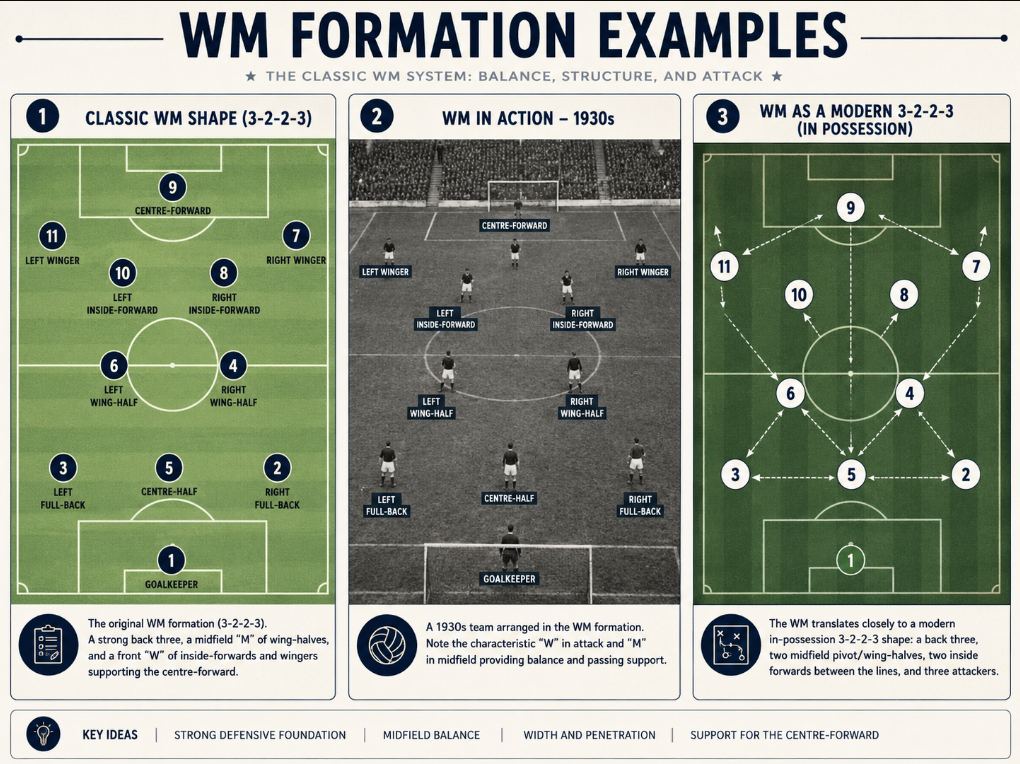
This previous insight helps a performance analyst understand current match scenarios. Ideas like inverted full-backs, back-three build-up, box midfields, strong pressing, rest defense, and positional rotations can be seen as tactical tools to tackle specific problems in games, rather than trends. This helps the analyst to give more information to the coaches and players.
The book also stresses the importance of context. Wilson makes it obvious that there is no one best formation or universal tactical option. You have to judge systems on player attributes, opposition structure, match situation, physical condition, belief, and tactical goals. This has a direct bearing on performance analysis, as the analyst must not focus on individual observations but relate tactical behavior to the broader context of the match.
However, Inverting the Pyramid is not a practical manual for performance analysis procedures. It does not teach coding systems, data visualization, software use, labeling processes, or report creation. Its importance is in enhancing the analyst’s tactical intelligence—understanding why teams play the way they do and how tactical ideas evolve over time.
All in all, Inverting the Pyramid is a must-read for football performance analysts who want to progress beyond descriptive analysis to explanatory analysis. It enhances the analyst’s capacity to assess team performance, articulate ideas tactically, and draw connections between match observations and fundamental tactical principles. The book offers a powerful conceptual framework for analysts working in professional football to view the game as an ongoing interplay of structure, space, player behavior, and strategic adaptability.
Boo Link: https://www.amazon.com/Inverting-Pyramid-History-Soccer-Tactics/dp/1568587384